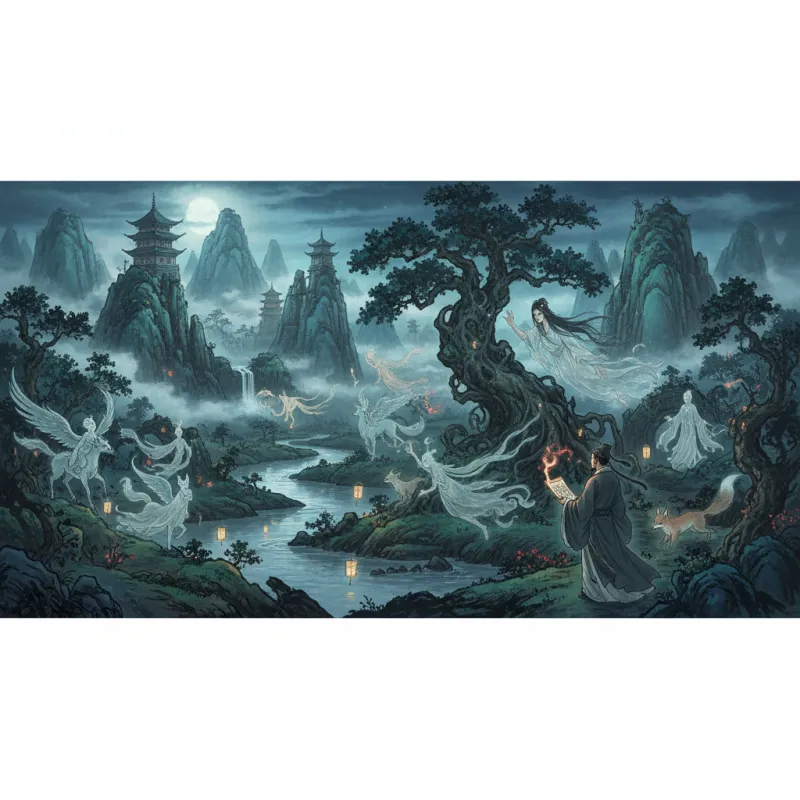
A fox spirit transforms into a beautiful woman and seduces a lonely scholar. A painted portrait comes alive at midnight. A ghost bride seeks revenge on the living. These aren't modern horror tropes—they're stories that terrified and captivated Chinese readers three centuries ago, and they all come from one extraordinary book: Liaozhai Zhiyi.
The Book That Haunted a Dynasty
Liaozhai Zhiyi (聊斋志异), known in English as Strange Tales from a Chinese Studio, is a collection of nearly 500 supernatural tales written by Pu Songling during the Qing Dynasty. Published around 1740, it became the definitive work of Chinese ghost literature—think of it as China's answer to Edgar Allan Poe's collected works, except written a century earlier and with fox spirits instead of ravens.
The title itself reveals the book's intimate origins. "Liaozhai" refers to Pu Songling's study, literally "the Studio of Leisure." "Zhiyi" means "records of the strange." This wasn't grand literature written in imperial halls—these were stories collected, refined, and written in a modest room by a man the establishment had rejected.
The Scholar Who Failed His Way to Immortality
Pu Songling (蒲松龄, 1640-1715) lived a life of brilliant failure. He passed the lowest level of the imperial examinations at age 19, showing genuine literary talent. Then he failed the provincial exams. Again. And again. For the next forty years.
This wasn't just personal disappointment—it was social death. The examination system was the only path to prestige, wealth, and influence in Qing China. Pu Songling spent decades as a poorly paid private tutor, watching less talented men advance while he remained stuck. That bitterness seeps into every page of Liaozhai. His stories are filled with corrupt officials, rigged examinations, and a supernatural world that's often more just than the human one.
But failure freed him. Without official duties, Pu Songling had time to collect stories from travelers, merchants, and peasants who passed through his region in Shandong Province. He set up a tea stand and traded refreshments for tales. He listened, refined, and transformed folk stories into literary art. The examination system rejected him, but he created something that would outlast every official who passed those tests.
What Makes Liaozhai Different
Chinese literature had ghost stories before Pu Songling—the Soushen Ji (搜神记) from the 4th century and Tang Dynasty tales established the genre. But Liaozhai revolutionized it through three key innovations.
First, Pu Songling wrote in classical Chinese prose that was elegant yet accessible, blending literary sophistication with storytelling verve. His style became the gold standard that later writers imitated but rarely matched.
Second, he made supernatural beings psychologically complex. His fox spirits aren't just seductresses or demons—they're individuals with motivations, flaws, and moral ambiguity. The ghost Nie Xiaoqian isn't evil; she's trapped and desperate. The fox spirit Ying Ning isn't cunning; she's innocent and joyful. Pu Songling gave monsters interiority.
Third, he weaponized the supernatural for social criticism. When human courts fail, ghost judges deliver justice. When scholars are exploited, fox spirits reward genuine virtue. The supernatural realm in Liaozhai operates on merit and morality—everything the Qing Dynasty examination system wasn't. Readers understood the subtext.
Inside the Strange Studio: Key Stories
Liaozhai contains 491 stories ranging from a few hundred characters to novella length. Some have become legendary in Chinese culture.
"Nie Xiaoqian" tells of a beautiful ghost forced by a demon to seduce and kill travelers. She falls in love with a scholar brave enough to resist her, and he helps free her from supernatural bondage. This story has been adapted into dozens of films, most famously the 1987 A Chinese Ghost Story that defined Hong Kong horror cinema.
"Ying Ning" features a fox spirit girl whose constant laughter seems simple-minded until you realize it's radical innocence in a cynical world. She marries a human and brings joy to his grim family—a fox spirit as savior rather than threat.
"The Painted Skin" is pure horror: a demon wears human skin like clothing, seducing a scholar while hiding its true monstrous form. When the skin is torn away, the creature beneath is nightmare fuel. This story explores appearance versus reality, a theme that resonated in a society obsessed with social facades.
"Xi Fangping" follows a man who descends to the underworld to appeal his father's unjust punishment. He discovers that hell's bureaucracy is as corrupt as earth's—officials take bribes, torture the innocent, and protect the guilty. Only by reaching the highest celestial authorities does he find justice. The satire is devastating.
The Liaozhai Universe: Rules of the Supernatural
Pu Songling's supernatural world operates on consistent internal logic. Ghosts are bound to the location of their death or unfinished business. Fox spirits cultivate themselves through Daoist practices, seeking to become immortal or human. Demons are genuinely malevolent but can be defeated by courage, virtue, or Daoist magic.
Crucially, the supernatural realm is more meritocratic than human society. A poor scholar's virtue matters more than a rich man's gold. Genuine love transcends the boundary between human and spirit. The examination system may be rigged, but karmic justice is real. This inverted moral universe gave readers hope—if not in this life, then perhaps in the next, or through supernatural intervention.
The stories also reveal Qing Dynasty anxieties. Fear of fox spirits reflected concerns about female sexuality and social mobility. Ghost stories processed grief in a society with high mortality rates. Demon tales externalized fears about deception and hidden evil. Liaozhai is a window into what kept 18th-century Chinese people awake at night.
Why Liaozhai Still Matters
Liaozhai Zhiyi has never gone out of print in China. It's been translated into dozens of languages, adapted into countless films, TV series, operas, and comics. Modern Chinese horror—from films to video games—still draws on Pu Songling's imagery and themes.
The book endures because Pu Songling understood something fundamental: supernatural stories work best when they're about human concerns. His ghosts and fox spirits are vehicles for exploring love, injustice, desire, mortality, and the gap between merit and reward. Strip away the supernatural elements, and you're left with timeless human struggles.
For contemporary readers, Liaozhai offers something rare—genuinely alien horror that operates on different cultural logic than Western ghost stories. There's no Christian framework of heaven and hell, no clear good versus evil. Instead, you get a complex supernatural ecosystem where fox spirits practice Daoist cultivation, ghosts navigate bureaucratic underworlds, and humans are often the real monsters.
Reading Liaozhai Today
Multiple English translations exist, with varying approaches. Herbert Giles' 1880 translation is historically important but dated and incomplete. John Minford's recent translation captures more of Pu Songling's literary style. Sidney Sondergard's complete translation prioritizes accessibility.
Start with the famous stories—"Nie Xiaoqian," "Ying Ning," "The Painted Skin"—to get a feel for Pu Songling's range. Then explore deeper. The lesser-known tales often contain his sharpest social criticism and strangest supernatural concepts. Some stories are genuinely funny, others heartbreaking, many deeply weird.
Reading Liaozhai requires adjusting to different narrative conventions. Stories often end abruptly once the supernatural element is resolved. Pu Songling frequently adds commentary explaining the moral or literary significance. Characters may seem flat by modern standards because they're serving allegorical purposes. But once you attune to the rhythm, the stories reveal their power.
The Studio's Legacy
Pu Songling died in 1715, still a failed scholar by official standards. He never saw Liaozhai Zhiyi published—it circulated in manuscript during his lifetime and was printed posthumously. He couldn't have imagined that his "strange tales" would define Chinese supernatural fiction for centuries, or that his fox spirits and ghosts would become cultural icons.
The irony is perfect. The examination system that rejected him is gone, remembered mainly as an oppressive institution. But the stories he wrote in his modest studio—the work of a "failure"—achieved a kind of immortality he could never have earned through official success. In the end, Pu Songling got his revenge on the system that dismissed him. He became immortal not through bureaucratic rank, but through the very supernatural tales the literati considered beneath serious literature.
Every time someone watches a Chinese ghost film, reads about fox spirit cultivation, or encounters the trope of the beautiful supernatural woman who loves a mortal man, they're experiencing Pu Songling's legacy. Not bad for a failed scholar from Shandong Province.
Related Reading
- Painted Skin: The Most Terrifying Story in Chinese Literature
- Nie Xiaoqian: The Ghost Romance That Conquered Cinema
- Pu Songling: The Failed Scholar Who Wrote China's Greatest Ghost Stories
- The Liaozhai Stories That Hollywood Should Adapt (But Probably Won't)
- Liaozhai Zhiyi: The Ghost Stories That Changed Chinese Literature
- Paper Offerings: Sending Wealth to the Afterlife
- Exploring Chinese Supernatural Folklore: The Haunting World of Ghosts and Spirits
- Exploring the Depths of Chinese Supernatural Folklore: Ghosts, Spirits, and Afterlife Beliefs
Explore Chinese Culture
- Explore ancient mythical creatures
- Explore Daoist exorcism traditions
- Explore Chinese folk beliefs and superstitions