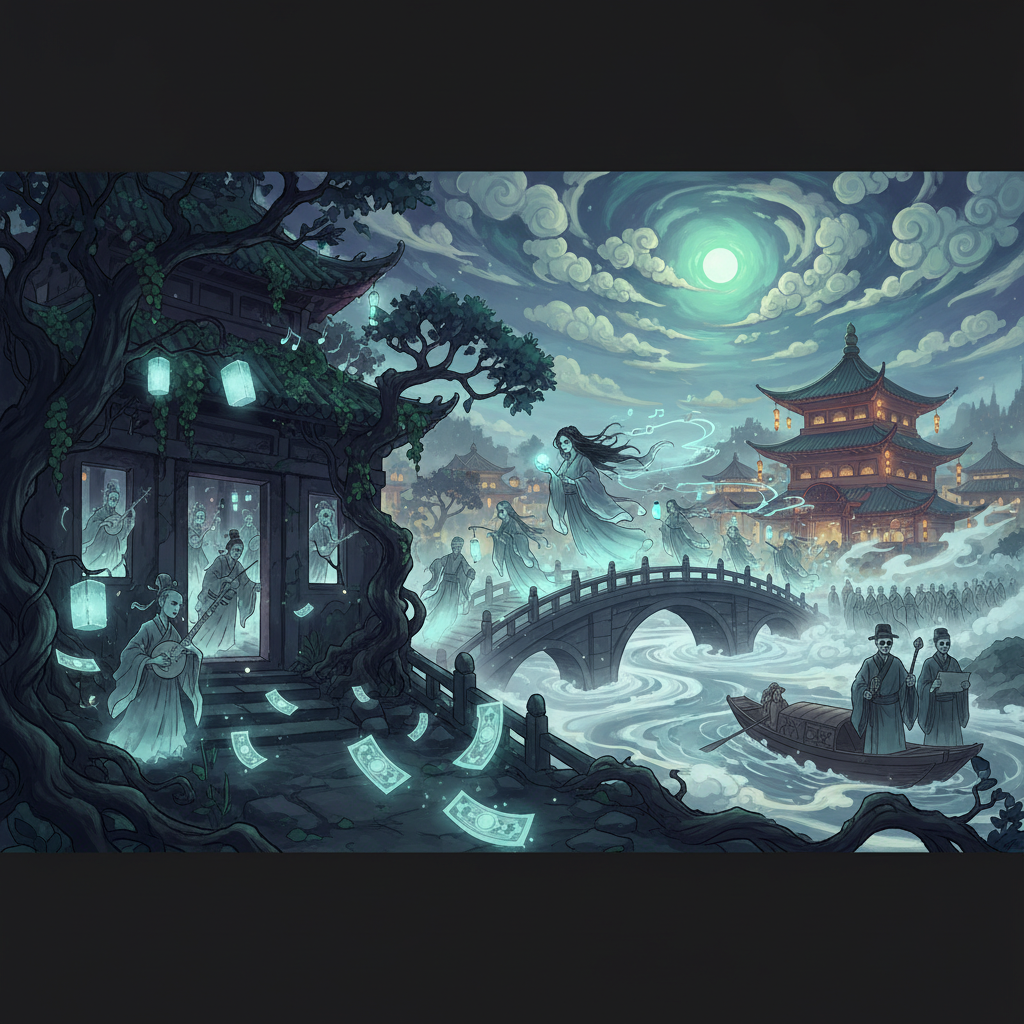
Introduction to Chinese Supernatural Folklore
Chinese supernatural folklore is a vast and intricate tapestry interwoven with myths, religious beliefs, and regional customs that have evolved over millennia. Ghosts, spirits, and the afterlife manifest prominently in Chinese culture, influencing rituals, literature, and social practices. Unlike many Western depictions of ghosts as terrifying figures, Chinese ghost stories often embody moral lessons, familial duty, and reflections on the natural cycle of life and death. This article delves into the historical background and cultural significance of these spectral beings, offering an academic yet accessible exploration of China's rich supernatural heritage.
Historical Context: Origins of Ghost and Spirit Beliefs in China
The roots of Chinese supernatural beliefs can be traced back to ancient times, particularly the Shang (c. 1600–1046 BCE) and Zhou (c. 1046–256 BCE) dynasties, when ancestor worship and reverence for spirits were integral to social fabric. The early Chinese believed that spirits of ancestors remained influential, capable of blessing or cursing descendants based on their rituals’ correctness. Texts like the Book of Rites (Liji) codified ancestral veneration practices, underscoring the connection between the living and the dead.
Furthermore, Daoism and Buddhism introduced additional layers to Chinese conceptions of the spirit world. Daoism emphasized harmony with nature and the cosmos, integrating beliefs about immortal beings and spirits who could intervene in human affairs. Buddhism, arriving during the Han dynasty, introduced the ideas of karma, reincarnation, and various realms of existence after death, which merged with indigenous beliefs to craft a uniquely Chinese worldview of the afterlife.
Ghosts and Spirits: Types and Characteristics
In Chinese folklore, the term for ghost — gui (鬼) — generally refers to the soul of a deceased person that has not found peace. These spirits can be broadly categorized:
- Restless Ghosts: Often souls who died violently or without proper burial rites, known to haunt the living seeking justice or interference.
- Ancestral Spirits: Revered and cared for via rituals and offerings, they protect and bless their families.
- Nature Spirits: Associated with specific locations such as mountains, rivers, or old trees — these spirits possess both benevolent and malevolent traits depending on their treatment by humans.
Unlike Western ghosts, Chinese gui are not necessarily malevolent but are frequently seen as tragic or wronged entities. Many folklore tales reveal ghosts warning the living, imparting wisdom, or seeking help to right past injustices.
Afterlife Beliefs and the Role of Hell in Chinese Folklore
The Chinese conception of the afterlife is neither linear nor uniform, blending Daoist, Buddhist, and folk views into a rich cosmology. Central to this is the notion of Diyu (地狱), often translated as “hell.” Unlike eternal damnation, Diyu is a complex subterranean labyrinth where souls undergo purification through various trials and punishments fitting their earthly sins.
Governed by the Ten Judges of Hell (Shi Wang Ye), souls face different tribunals and punishments, ranging from physical torment to moral lessons, before moving toward reincarnation or liberation. This system serves a didactic function, emphasizing ethical behavior in life.
The afterlife also includes paradisiacal realms such as the Western Pure Land (Xifang Jile Jing) in Buddhism, where virtuous souls await enlightenment. Daoist immortal realms represent transcendence beyond the cycle of death entirely.
Cultural Significance of Ghost Festivals and Rituals
One of the most well-known cultural manifestations related to ghosts is the Ghost Festival (Zhongyuan Jie), observed on the 15th night of the seventh lunar month. According to tradition, during this time, the gates of the underworld open, allowing spirits to return to the world of the living. Families prepare offerings of food, incense, and paper money to appease wandering spirits and ancestors alike.
This festival highlights the continued importance of maintaining harmony between the living and the spirit world. It also reflects broader cultural themes of filial piety, social order, and cosmic balance. In urban legends and popular culture, ghost festival tales often feature encounters with spirits, cautioning about respect for the unseen.
Conclusion: Enduring Fascination with the Supernatural in Modern China
Despite modernization and scientific advances, supernatural folklore remains a vibrant part of Chinese cultural identity. Ghost stories and beliefs continue to inspire literature, cinema, and urban legends, connecting contemporary society to ancient spiritual roots. Understanding the depth and nuances of Chinese ghosts, spirits, and afterlife beliefs offers not only insight into a rich cultural heritage but also a window into universal human concerns — mortality, memory, and moral reckoning.
Through this exploration, it becomes clear that Chinese supernatural folklore is far more than mere superstition; it is an enduring testament to humanity’s quest to comprehend life beyond death, guided by tradition, spirituality, and cultural wisdom.