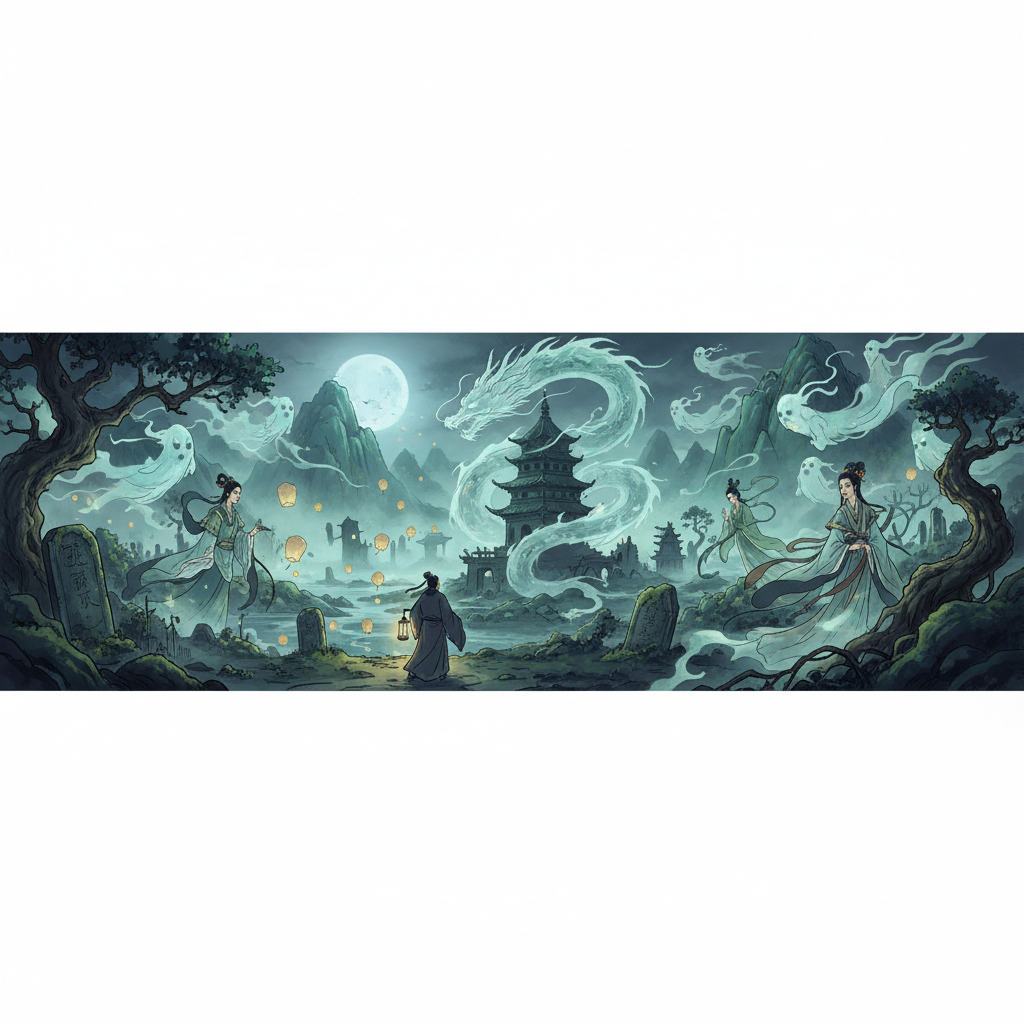
The Roots of Chinese Supernatural Folklore
Chinese supernatural folklore is deeply intertwined with the nation’s rich history and cultural diversity, encompassing various beliefs in ghosts, spirits, and the afterlife. While these narratives may differ between regions, they share common threads shaped by historical, spiritual, and social contexts. A considerable portion of this folklore draws upon Confucian and Daoist beliefs, with emphasis placed on filial piety, respect for ancestors, and maintaining harmony with the natural and supernatural realms.
Ghosts in Chinese culture often inhabit a space between the living and the dead, serving as reminders of unfinished business, unresolved emotions, or familial obligations. This belief underscores the importance of ancestor worship—rituals that honor deceased family members and invite their spirits to partake in daily life or special celebrations.
Ghostly Encounters: Types of Spirits in Chinese Folklore
Within the vast realm of Chinese supernatural folklore, various types of ghosts and spirits have been identified, each embodying different cultural meanings:
-
Benming nian (本命年): In Chinese astrology, a person’s Benming nian—a year corresponding to their zodiac sign—can bring about encounters with restless spirits. It is believed that those in their Benming nian should take precautions to ward off negative energy and supernatural encounters.
-
Yin spirits: These spirits are often linked to individuals who have experienced untimely deaths or traumatic events. They are believed to linger in the earthly realm, seeking resolution or vengeance for their grievances. Festivals, such as the Ghost Festival during the seventh lunar month, highlight the need to calm these spirits through offerings, prayers, and rituals.
-
Protective spirits: Not all spirits in Chinese folklore carry malevolent intent. Many communities believe in protective spirits, including local deities or guardian ancestors who safeguard homes, families, and even landmarks. These spirits are often venerated through erecting shrines or performing traditional rituals to ensure their favor.
The Ghost Festival: A Cultural Mosaic of Beliefs
The Ghost Festival, or Zhongyuan Jie (中元节), is a significant cultural event in Chinese folklore, steeped in ancient rites aimed at appeasing wandering spirits and honoring ancestors. Celebrated on the 15th day of the seventh lunar month, the festival reflects various cultural beliefs and practices.
During this time, families prepare food offerings and burn joss paper, symbolic representations of currency and material goods intended for the deceased. The festival is marked by lantern processions and ceremonies in temples, echoing the importance of bridging the gap between life and death. These rituals not only reflect individual respect for ancestors but also serve as a communal act of remembrance and reverence.
Beliefs about the Afterlife: A Journey Beyond
Chinese beliefs about the afterlife are varied and complex, influenced by centuries of philosophical thought. The prominent notions stem from Confucianism, Buddhism, and Daoism, each contributing unique perspectives.
In general, the afterlife is perceived as a continuation of one’s existence, where the soul undergoes a journey for judgment and eventual reincarnation. After death, individuals may pass through various realms, including hell, where figures like Ox-Head and Horse-Face act as guides, determining one’s fate based on earthly behavior.
Many Chinese people believe in concepts of heaven and hell (Tian and Diyu), often visualizing the afterlife as a series of realms where spirits may inhabit based on their life choices. Ghostly manifestations in folklore frequently serve as cautionary tales—warnings against moral transgressions or reminders of societal values.
Popular Ghost Stories: Legends That Endure
Chinese folklore teems with enchanting ghost stories and legends that have been passed down through generations. These tales often feature ghosts seeking justice, love, or resolution. Among the most notable is the tragic love story of Niulang and Zhinu, whose connection transcended the barriers of the afterlife but also teaches lessons about love, loyalty, and sacrifice.
Another famous figure is the "White Lady" (Bai Ze), a spirit that evokes both fear and sympathy. Her tale has transformed into a variety of adaptations in literature and film, underlining the dualities present in ghostly narratives—both the benevolent and malevolent nature of spirits in Chinese folklore.
Conclusion: Honoring the Spirits in Modern China
As China transitions into a modern society, the significance of ghosts and spirits in folklore remains palpable. While contemporary belief systems may exhibit more secular tendencies, cultural rituals and traditions surrounding the supernatural still hold a crucial place in people’s hearts. Festivals, ancestor worship, and ghost stories serve as vital cultural threads, reminding individuals of their connections to the past and the ongoing dialogue between the living and the dead.
In exploring Chinese supernatural folklore, one uncovers a vibrant tapestry of beliefs, where the line between the natural and the supernatural is intriguingly blurred. As our understanding of these ghostly narratives deepens, we appreciate the profound cultural significance they hold in shaping moral values, social customs, and familial bonds throughout the ages.