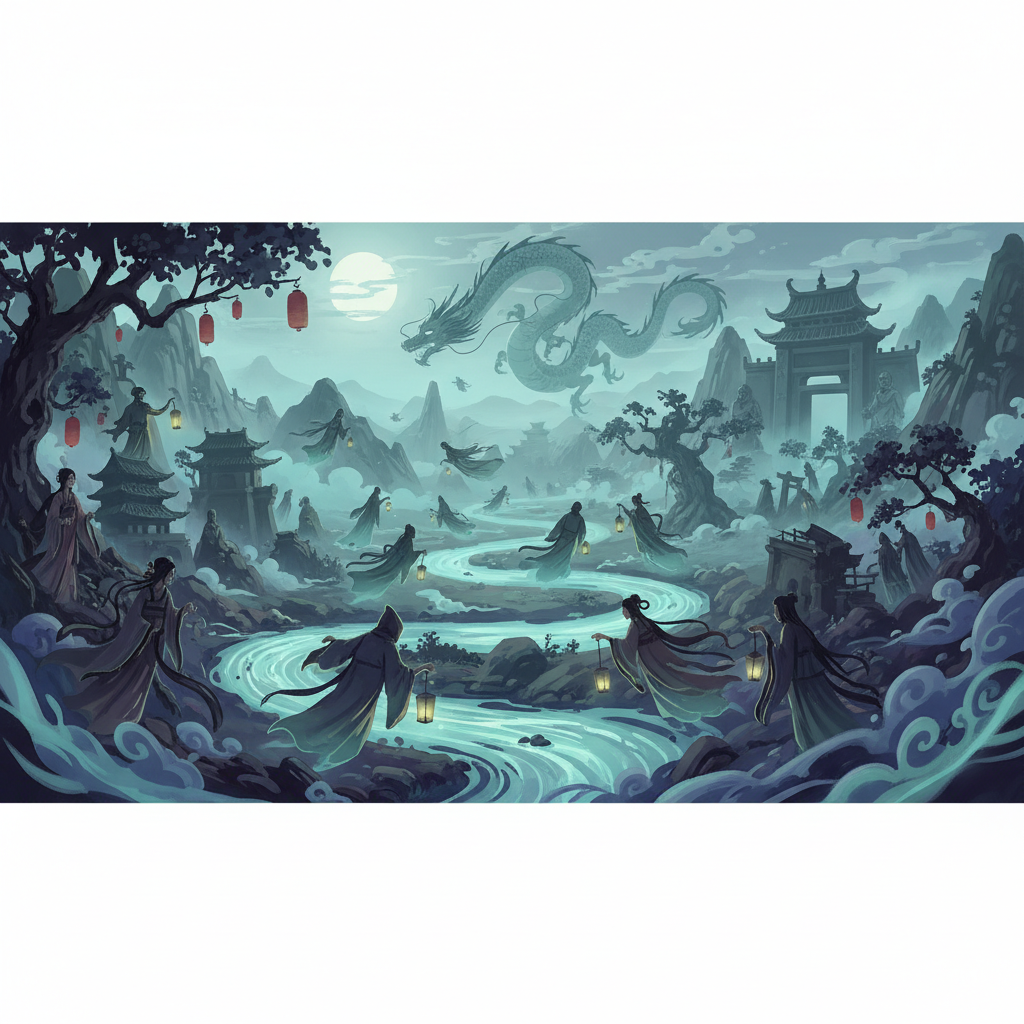
Introduction to Chinese Supernatural Folklore
Chinese culture boasts one of the richest and most intricate supernatural traditions in the world. Tales of ghosts, spirits, and the afterlife have permeated literature, religious practice, and everyday life for millennia. These beliefs are not merely entertainment; they reflect deep philosophical and spiritual understandings about life, death, morality, and the cosmos. This article explores Chinese supernatural folklore’s historical context, the nature of ghosts and spirits, and traditional conceptions of the afterlife that continue to influence Chinese societies today.
Historical Foundations of Ghost and Spirit Beliefs
The foundation of Chinese supernatural folklore dates back to ancient times, intertwining with the rise of Confucianism, Taoism, and Buddhism. Early Chinese thought emphasized ancestor veneration, a practice acknowledging that the spirits of the deceased influence the living. The Shan Hai Jing (Classic of Mountains and Seas), a compilation of mythic geography and tales from the Warring States period and beyond, contains early accounts of strange beasts and spirits inhabiting remote places.
Confucianism reinforced the moral duty to honor ancestors to maintain social order and harmony between the living and the dead. Taoism introduced a more complex cosmology involving various types of spirits and the idea of spiritual immortality. Buddhism, arriving from India around the first century CE, further expanded the concept of the afterlife through its teachings of karma, rebirth, and realms of suffering and bliss, intertwining with native Chinese beliefs.
Types of Ghosts and Spirits in Chinese Folklore
Chinese folklore categorizes spirits in varied ways, often distinguishing them by origin, character, and intention toward humans. Common types include:
- Gui (鬼): The generic term for ghosts, usually the unsettled spirits of deceased humans who died tragically or with unresolved emotional ties. These ghosts might haunt specific locations or people, seeking justice, revenge, or peace.
- Shen (神): Beneficent spirits or deities often associated with specific places such as mountains, rivers, or homes. Ancestral spirits are also honored as shen to maintain protective roles.
- Yao (妖): Supernatural creatures or spirits, sometimes malevolent, including fox spirits (Huli Jing) and other shape-shifters that appear in folklore to deceive or assist humans.
- Hungry Ghosts: Souls suffering from insatiable hunger and thirst due to past misdeeds. Although related to Buddhist cosmology, these spirits are a widespread motif in Chinese culture, symbolizing spiritual and social imbalance.
These entities embody moral lessons, social values, or metaphysical principles, illustrating the Chinese worldview’s dynamism.
Cultural Significance: Ghosts as Moral and Social Agents
In Chinese tradition, ghosts often serve as reminders of human morality and justice. Ancestral ghosts represent filial piety’s importance, while vengeful spirits highlight consequences for injustice or improper burial rites. Folklore stories of “wronged” souls demand ritual appeasement to restore harmony.
Festivals like the Zhongyuan Festival (commonly called Ghost Festival) epitomize this dynamic; during this time, it is believed that the spirits of the dead return to the world of the living. Families perform rituals, such as offering food and burning incense or paper money, to honor these spirits and ensure peace for both the deceased and the living. This festival underscores the living’s responsibility to the dead and the permeable boundary between worlds during designated times.
Afterlife Beliefs: From Underworld Courts to Reincarnation
The Chinese conception of the afterlife is richly layered and diverse, blending indigenous and imported religious ideas. A prominent element is the belief in an elaborate underworld, or Diyu (地狱), sometimes described as a bureaucratic realm governed by judges who punish souls for their earthly misdeeds through various tortures, before allowing reincarnation. This concept reflects Chinese society’s imperial bureaucracy mirrored into the cosmos — justice continues beyond death.
Simultaneously, influenced by Buddhist teachings, reincarnation is central: the soul undergoes multiple lifetimes to atone for karma accumulated through good or bad deeds. Taoist philosophies also envision the possibility of achieving immortality through spiritual cultivation, transcending the cycle of death and rebirth.
Further, funeral customs and burial practices symbolize and facilitate the journey of the soul. Proper burial rites, grave orientation, and offerings underscore respect for the dead and assure favorable conditions for the spirit’s peaceful transition and protection of descendants.
Interesting Details and Contemporary Perspectives
Contemporary China continues to honor many traditional beliefs despite modernization and secularization. Ghost stories and spirit-related folklore remain popular in Chinese literature, television, and cinema, providing insight into collective cultural anxieties and hopes.
One intriguing detail concerns “ghost towns” or abandoned places reputed to be haunted, revealing the continuing cultural fascination with spirits and unsettled energies in old spaces. Additionally, the rise of urban legends and haunted site tours in modern China attests to the persistence of supernatural folklore in new social contexts.
The coexistence of ancient rituals, Buddhist practices, and Taoist rites demonstrates the syncretic nature of Chinese spirituality. This syncretism allows a living tradition that adapts while maintaining the cultural core of respect and communication with the supernatural world.
Conclusion
Chinese supernatural folklore offers a profound window into how a civilization perceives death, morality, and the spirit realm. From ghostly tales to complex afterlife judgments, these beliefs serve as moral compasses and spiritual frameworks influencing societal behaviors and individual worldviews. Understanding these traditions enriches appreciation of not only Chinese culture but also the universal human quest to fathom life beyond death.