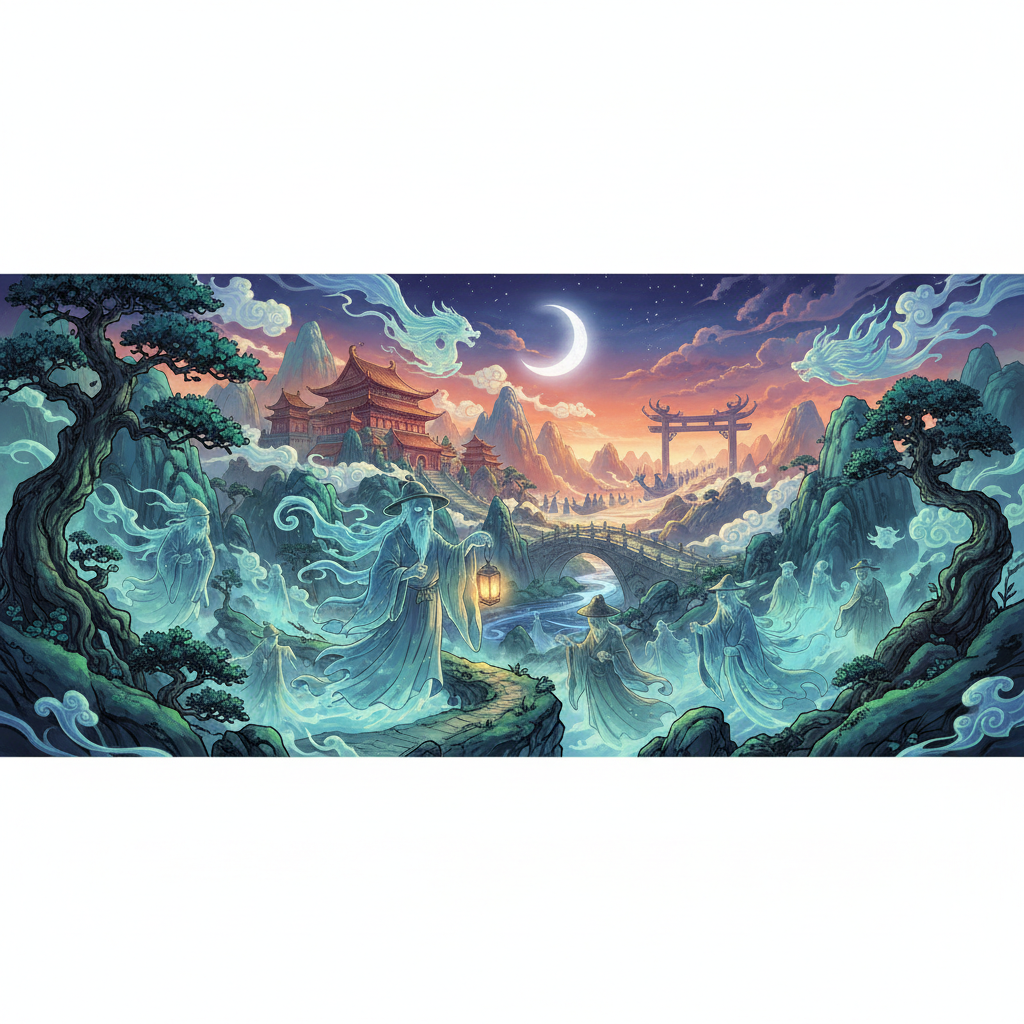
Introduction to Chinese Supernatural Folklore
Chinese supernatural folklore weaves a complex and fascinating tapestry of beliefs about ghosts, spirits, and the afterlife. Rooted deeply in thousands of years of cultural, religious, and philosophical traditions, these stories have shaped not only popular imagination but also societal customs and rituals. Understanding these supernatural elements offers a window into how the Chinese perceive the thin veil between life and death, and how they maintain connections with ancestors and unseen realms. This article explores the historical context, cultural significance, and intriguing aspects of Chinese supernatural folklore.
Historical Context: From Ancient Texts to Popular Belief
The beliefs about ghosts and the afterlife in China date back to ancient times, with earliest references found in classical texts such as the Shijing (Book of Songs) and Zuo Zhuan. Confucianism, Taoism, and Buddhism—all major influences in Chinese thought—have contributed distinct perspectives on the soul and otherworldly beings.
Confucianism emphasizes filial piety and ancestor worship, encouraging ongoing reverence for deceased family members as protective spirits. Taoism, with its focus on harmony between humans and nature, introduces various spirits and immortals, bridging the earthly with the divine. Buddhism, which entered China around the first century CE, brought ideas of karma and reincarnation that further enriched Chinese views of the afterlife. These religious traditions did not exist in isolation but syncretized over centuries, allowing folk beliefs about ghosts and spirits to proliferate.
Types of Ghosts and Spirits in Chinese Folklore
Chinese folklore classifies ghosts and spirits into diverse categories, reflecting their origins, behaviors, and purposes. Among the most commonly acknowledged are:
- Gui (鬼): The general term for ghosts, typically souls of the dead who have not found peace. These spirits are often depicted as melancholic or vengeful, especially if they died violently or were neglected in death rituals.
- Shen (神): Benevolent deities or ancestral spirits who protect and guide the living. Ancestor spirits hold particular importance during festivals like Qingming and the Hungry Ghost Festival, when offerings are made to honor them.
- Youxia (幽灵): Shadowy or wandering spirits associated with unsettled matters or curses. They are often involved in cautionary tales warning against moral failings or disrespect.
- Huli jing (狐狸精): Shape-shifting fox spirits, believed to possess magical powers, sometimes helpful but frequently tricksters or seducers in folklore.
These varied entities illustrate the complex moral and spiritual ecosystem Chinese folklore embraces, where ghosts may be feared, revered, or negotiated with spiritually.
Afterlife Beliefs and Their Cultural Impact
Chinese afterlife beliefs emphasize the continuity of existence beyond death, governed by a complex interplay of judgment, reincarnation, and ancestral influence. The "underworld," often conceptualized as Diyu (地狱), resembles a bureaucratic realm where souls undergo trials, reflecting Confucian ideas of order and morality. Here, judges assess the deeds of the deceased, assigning punishments or rebirth based on behavior during life.
Family and communal rituals reflect these beliefs: the annual Qingming Festival (Tomb-Sweeping Day) honors ancestors by cleaning graves and offering food, reinforcing familial bonds beyond death. The Ghost Festival, held on the 15th night of the seventh lunar month, is a time when spirits roam the living world; offerings are made to appease and feed them, preventing misfortune. These customs underscore the Chinese worldview that the dead remain active participants in the community’s ongoing life cycle.
Fascinating Folkloric Practices and Symbolism
Chinese supernatural folklore is also rich with symbolic practices designed to interact with spirits:
- Paper offerings: Known as joss paper or "hell money," these are burned for the deceased, believed to provide them with money and goods in the afterlife.
- Spirit mediums and rituals: In some communities, shamans or Taoist priests communicate with spirits to solve spiritual disturbances or bring blessings.
- Protective amulets and talismans: Symbols and inscriptions are widely used to ward off malevolent ghosts or cure hauntings.
Such rites illustrate an ongoing dialogue between the living and the supernatural—a relationship governed by respect, ritual, and reciprocity.
Conclusion: The Enduring Legacy of Chinese Supernatural Folklore
Chinese supernatural folklore reflects a profound cultural engagement with the mysteries of death and the spirit world. Intertwining history, religion, and social values, these beliefs continue to influence Chinese customs and popular culture today. Far beyond mere superstition, the ghosts and spirits of Chinese folklore offer insights into human concerns about mortality, morality, and the maintenance of social harmony across generations. In studying these stories and practices, we glimpse a worldview that honors both the unseen and the sacred ties binding the living and the dead.