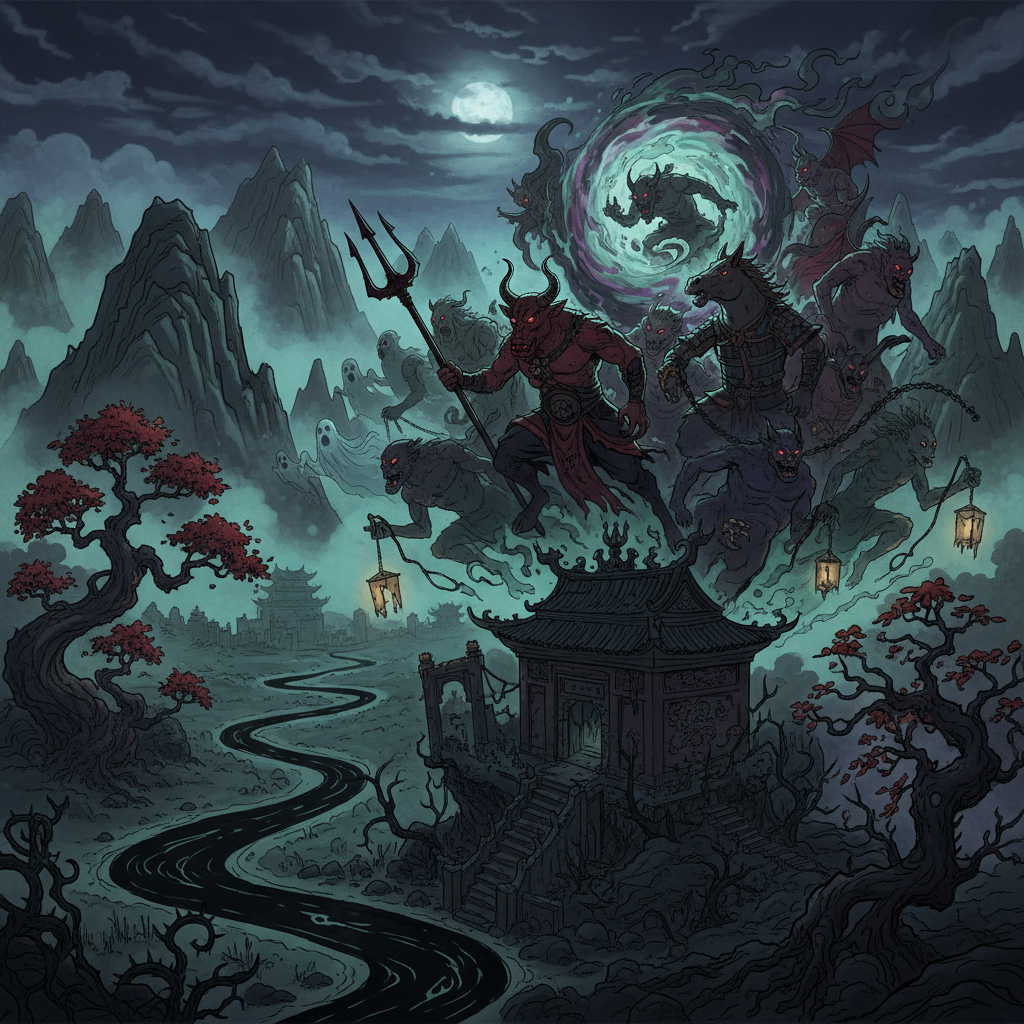
Introduction to Chinese Demons
Chinese folklore is rich with tales of supernatural beings, particularly demons who play significant roles in cultural narratives and religious beliefs. These entities, often seen as harbingers of chaos and trickery, are intertwined with the spiritual landscape of Chinese history. Their tales provide insight into societal values, fears, and the cultural perception of the afterlife.
Historical Context of Chinese Demons
The concept of demons in Chinese culture dates back thousands of years, with roots in ancient mythology and the early forms of Daoism and Buddhism. From the Han dynasty (206 BCE - 220 CE) onward, writings such as "The Classic of Mountains and Seas" introduced various supernatural beings, including demons and spirits. By the time of the Tang dynasty (618-907 CE), the idea of demons became more formalized, influencing literature, art, and religious practices.
The word for demon, "mó," is often associated with malevolent spirits, which reflects a belief in a dualistic universe where good and evil constantly battle for dominance. This duality is not only present in religious texts but also in the everyday life of the Chinese people, where the fear and reverence for these demons shaped their rituals and responses to the supernatural.
The Role of Demons in Cultural Beliefs
In traditional Chinese beliefs, demons serve various purposes, acting as entities that influence the natural world and human affairs. For example, the "Yin" demons are often connected to darker aspects of life, representing misfortune, illness, and death. In contrast, "Yang" spirits symbolize positive forces, such as blessings and prosperity. Many demons were believed to come into being due to unmet desires or grievances, reflecting societal fears of the unknown and the consequences of human actions.
Moreover, the presence of demons in folklore often acts as a moral lesson, reminding individuals of the repercussions of wrongful actions. Tales of mischief-making demons serve as warnings about the dangers of greed, lust, and anger. As such, these narratives are not merely stories but serve to uphold the social order and moral fabric of Chinese society.
Types of Chinese Demons and their Characteristics
Chinese demonology comprises a vast array of demons, each with distinct characteristics and stories. Some of the most notable include:
1. The Huli Jing (Fox Demon)
Often depicted as beautiful women, Huli Jing are thought to deceive men, luring them into moral destruction. This duality of seduction and danger makes them fascinating figures in folklore and literature.
2. The Jiangshi (Hopping Vampire)
A reanimated corpse that moves by hopping, Jiangshi are known for preying on the living. These creatures embody fears of death and the afterlife, illustrating the belief in restless spirits who cannot find peace.
3. The Tudi Gong (Earth God)
Although not a demon in the traditional sense, Tudi Gong is often invoked alongside more threatening spirits. As guardians of the land, these deities can either be benevolent or vengeful, depending on how they are treated by the living.
4. The Miao Jian (Hexer)
These sinister beings are thought to have the ability to curse individuals, bringing illness or misfortune. Miao Jian highlight the belief in supernatural retribution and the power of human intent.
Cultural Significance of Demonic Figures
The significance of demons extends beyond mere superstition; they embody essential aspects of Chinese identity. During festivals such as the Ghost Festival, offerings are made to appease the spirits and ensure peace. Cultural rituals often reflect the belief that aligning oneself with the forces of good can ward off evil. This interplay between daily life and the supernatural illustrates the pervasive influence demons have on Chinese spirituality.
As global interest in folklore continues to rise, the stories of these Chinese demons have found their way into modern literature, film, and art, resonating with audiences both domestically and internationally. By examining these demons, we not only preserve historical knowledge but also foster an appreciation for the enduring nature of cultural narratives.
Conclusion: The Enduring Legacy of Chinese Demons
Chinese demons are far more than the malevolent entities of horror stories; they are a reflection of the cultural psyche, embodying fears, morals, and societal norms. As we delve into these supernatural tales, we gain a deeper understanding of China's complex history and the way its people navigate the uncertainties of life and the afterlife. Embracing these narratives can enrich our appreciation for the cultural depths of Chinese folklore, demonstrating that in every legend lies a valuable lesson waiting to be discovered.