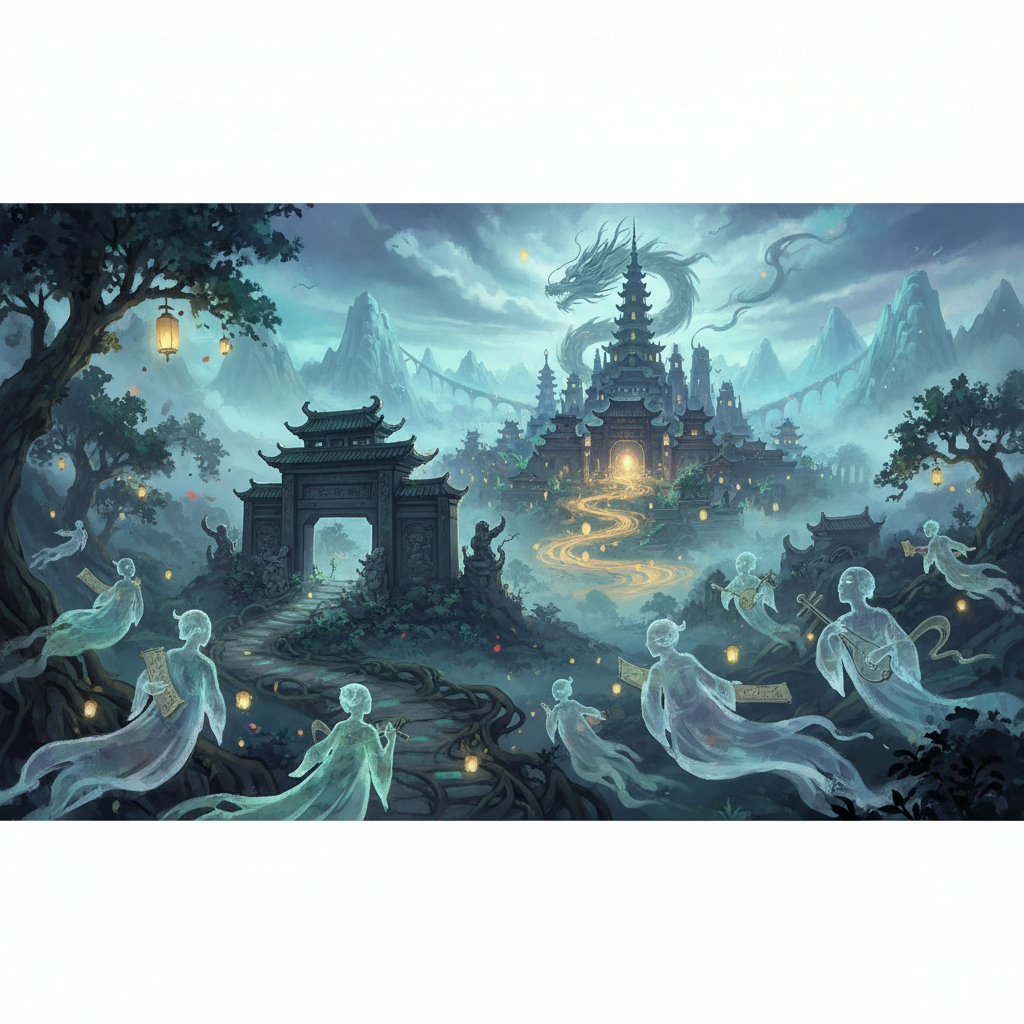
The Rich Tapestry of Chinese Supernatural Folklore
Chinese culture boasts one of the most intricate and compelling supernatural traditions in the world, rich with beliefs regarding ghosts, spirits, and the afterlife. This tradition has evolved over thousands of years, blending various philosophies, including Confucianism, Buddhism, and Daoism. Each of these systems contributes to a multifaceted understanding of death, the afterlife, and how the living interact with the supernatural.
Historical Roots of Afterlife Beliefs in China
The belief in ghosts and the afterlife can be traced back to ancient Chinese civilizations. Early agrarian societies worshipped ancestral spirits, believing they had a direct influence on the fortunes of the living. The veneration of ancestors still plays a crucial role in contemporary Chinese culture, especially during festivals like Qingming, when families visit graves to pay respects.
During the Han Dynasty (206 BCE – 220 CE), influences from Daoist and Buddhist thoughts began to shape Chinese beliefs about the afterlife. The Daoist view often emphasizes a harmonious balance between the material and spiritual worlds, whereas Buddhism brings the notion of karma and reincarnation into the fold. These systems contributed to an evolving narrative where the afterlife is seen as a continuation of one’s earthly journey.
The Spectrum of Spirits: Friendly and Malevolent
Chinese folklore comprises a vast array of supernatural beings, ranging from benevolent spirits to malevolent ghosts. Benevolent entities like "Tudi Gong," the earth god, and "Shennong," the god of agriculture, serve to protect and bless the living. In contrast, malevolent spirits often include the souls of those who died violent or untimely deaths. These wandering souls, sometimes referred to as "hungry ghosts," are believed to roam the earth, dissatisfied with their circumstances.
Significantly, many of these spirits are depicted in popular culture and traditional celebrations. For example, the "Ghost Festival" or "Zhongyuan Jie" is observed annually when families honor their deceased ancestors, providing them with offerings of food and money to appease their restless souls. This duality of friendly and angry spirits highlights the cultural emphasis on the importance of maintaining a healthy relationship with one’s ancestors.
The Afterlife: A Journey of Transformation
In Chinese belief, death is not seen as an end but rather as a transformative journey. The afterlife is often portrayed as a realm where souls are judged and subsequently enter various states of existence depending on their deeds in life. This concept intertwines with Buddhist ideas of reincarnation, which posit that one’s actions (karma) directly affect future lives.
The "Ten Kings of Hell," derived from Buddhist traditions, are a crucial aspect of this belief system. Each king determines the fate of a soul after death, presenting a detailed judgment process that dictates whether a soul will ascend to heaven, be reincarnated, or suffer in hell. This has fostered a culture of moral accountability among the living.
The Role of Rituals in Navigating the Afterlife
Rituals in Chinese culture are significant for honoring the deceased and navigating the complexities of the afterlife. The practice of burning joss paper (ghost money) during festivals is believed to provide the deceased with resources in the afterlife. Additionally, families often conduct elaborate funerals to ensure the dead make a smooth transition.
Chinese folk religions emphasize the importance of proper burial sites, with practices like feng shui playing a critical role in determining the best locations for graves. This focus on spatial harmony reflects the deeper belief in a balanced relationship between the living and the spirits of the deceased.
Conclusion: A Living Tradition of Beliefs About Death and the Supernatural
Chinese supernatural folklore is a living testament to the nation’s rich cultural heritage, intertwining history, philosophy, and mythology. Beliefs about ghosts, spirits, and the afterlife not only shape individual families’ practices but also weave through the collective consciousness of Chinese society.
As the world evolves, so too does the interpretation of these longstanding traditions. Modern influences and globalization introduce new ideas and forms of expression regarding the supernatural, yet the deep respect for ancestors and the significance of the afterlife remain firmly entrenched in the culture.
With a keen understanding of these practices, one can appreciate how profoundly the beliefs about ghosts and the afterlife permeate Chinese life and thought, bridging past with present in a tapestry of rich cultural narratives that continue to inspire and haunt.