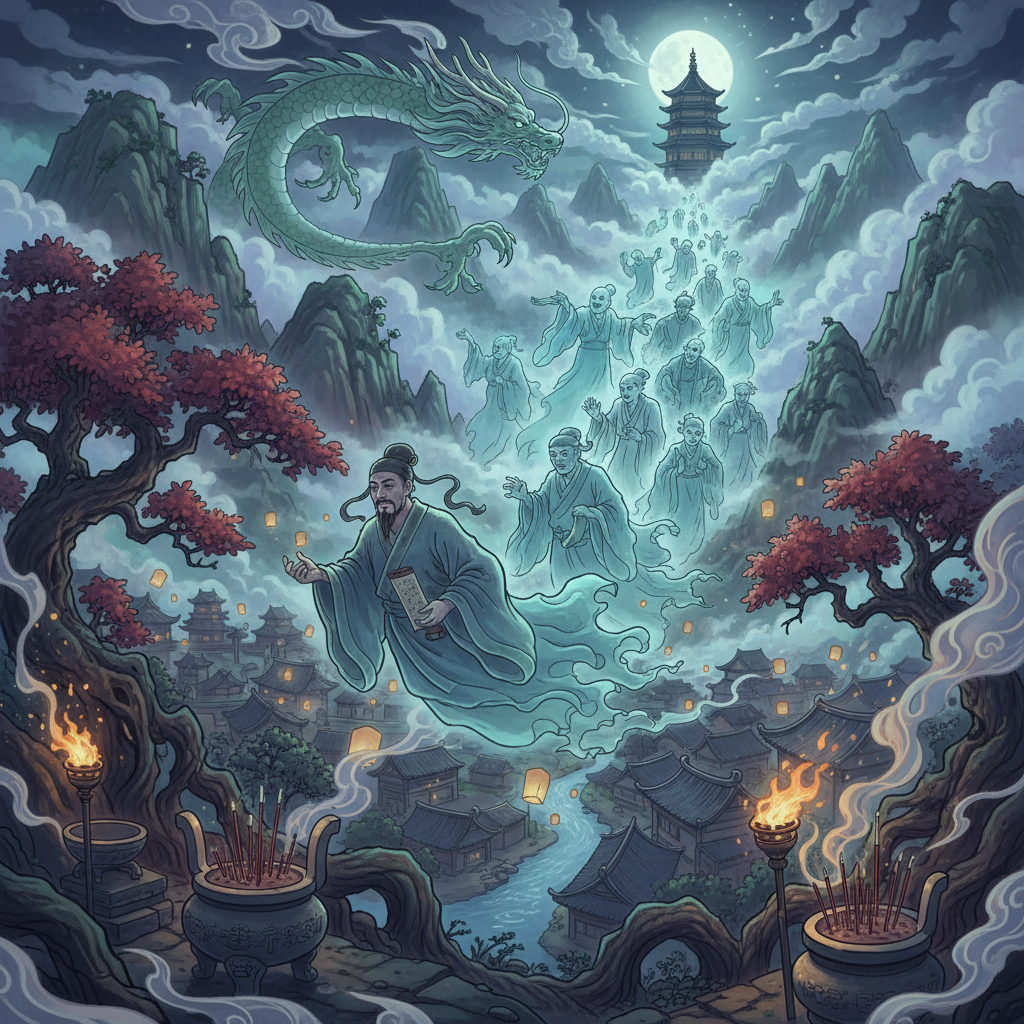
Introduction to Chinese Afterlife Beliefs
Chinese folklore vividly illustrates the complexity of beliefs surrounding the afterlife. It is steeped in a cultural context shaped by thousands of years of history, merging aspects of Taoism, Buddhism, and Confucianism. These traditions have forged a diverse understanding of ghosts, spirits, and the supernatural, emphasizing a belief in life beyond death.
In Chinese cultural narratives, the afterlife is not merely an endpoint but a continuous journey—one where the living must navigate their relationships with the deceased. This article explores the themes of supernatural folklore in China, focusing on ghosts and spirits while revealing their cultural significance and historical context.
Historical Context of Supernatural Beliefs
The roots of Chinese supernatural beliefs can be traced back to ancient religious traditions, where natural phenomena were attributed to spiritual entities. The Yangshao and Longshan cultures during the Neolithic period engaged in ancestor worship, laying the groundwork for later beliefs.
Taoism and Buddhism further enriched these views on the afterlife. Taoism emphasizes harmony between the living and the spiritual realm, advocating for the respectful treatment of ancestors, while Buddhism introduced concepts such as karma and reincarnation. These philosophies coalesced over centuries, creating a rich tapestry of folklore surrounding spirits and ghosts.
The Nature of Ghosts in Chinese Folklore
In Chinese folklore, ghosts can occupy a spectrum of existence—ranging from benevolent ancestors to vengeful spirits. The term "ghost" (鬼, guǐ) doesn't always carry a negative connotation; it often refers to any spirit of the deceased. In popular belief, a ghost's behavior can be influenced by the manner of their death and their unresolved issues during life.
For instance, those who die untimely or violent deaths are often seen as "hungry ghosts" (饿鬼, èguǐ), doomed to wander the earth, tormented by their desires. This understanding encourages rituals to appease these spirits, which is deeply embedded in the spiritual practices of modern China.
Ghosts and the Afterlife Journey
The Chinese afterlife is envisioned as a layered realm where different experiences await spirits. The concept of “Diyu” (地狱), or hell, reflects a rich, multifaceted understanding of punishment and redemption. Influenced by Buddhist beliefs, Diyu is not merely a place of eternal damnation but rather a temporary state where souls confront their past actions through trials overseen by judges.
In this landscape, spirits can achieve redemption and ascend to higher realms. The belief in reincarnation underscores a moral dimension to life and encourages ethical living. This celestial perspective offers insight into the broader philosophical underpinnings of Chinese society, emphasizing that one's actions in life ultimately impact the afterlife.
Rituals and Practices Addressing the Supernatural
Rituals form an integral part of engaging with the supernatural in Chinese culture. The Qingming Festival, also known as Tomb-Sweeping Day, is one of the most significant occasions wherein families honor their ancestors by cleaning graves, offering food, and burning paper money. This act of remembrance is a vital way to connect the living and the dead, illustrating the importance of ancestral veneration in Chinese culture.
Additionally, ghost festivals such as the Ghost Festival (中元节, Zhōngyuán jié) provide a structured occasion when it is believed that the gates of hell open, allowing spirits to return to the world of the living. During this time, food offerings, rituals, and performances are conducted to ensure the spirits are appeased and do not cause mischief.
Modern Interpretations and Cultural Significance
Today, beliefs in ghosts and the afterlife still play a vital role in Chinese culture. Even in modern urban environments, people remain connected to these traditions, often celebrating festivals and participating in rituals that honor ancestors. Film and literature often draw upon elements of supernatural folklore, keeping these narratives alive and relevant to contemporary audiences.
Moreover, the increasing global interest in Eastern philosophies has sparked renewed fascination with Chinese beliefs concerning clarity and action in the afterlife. This collective enthusiasm serves as a bridge, drawing from ancient traditions while adapting to modern sensibilities.
Conclusion: A Rich Tapestry of Belief
The diverse beliefs surrounding ghosts and the afterlife in Chinese culture create a rich tapestry that connects generations. As historical contexts, rituals, and modern interpretations intertwine, these narratives remain vital to a deep understanding of Chinese identity and cultural continuity. Ghosts and spirits transcend mere folklore; they embody the ongoing dialogue between life and death, reflecting societal values and the human experience. As we explore these beliefs, we find a profound reverence for the past and an enduring hope for what lies beyond.