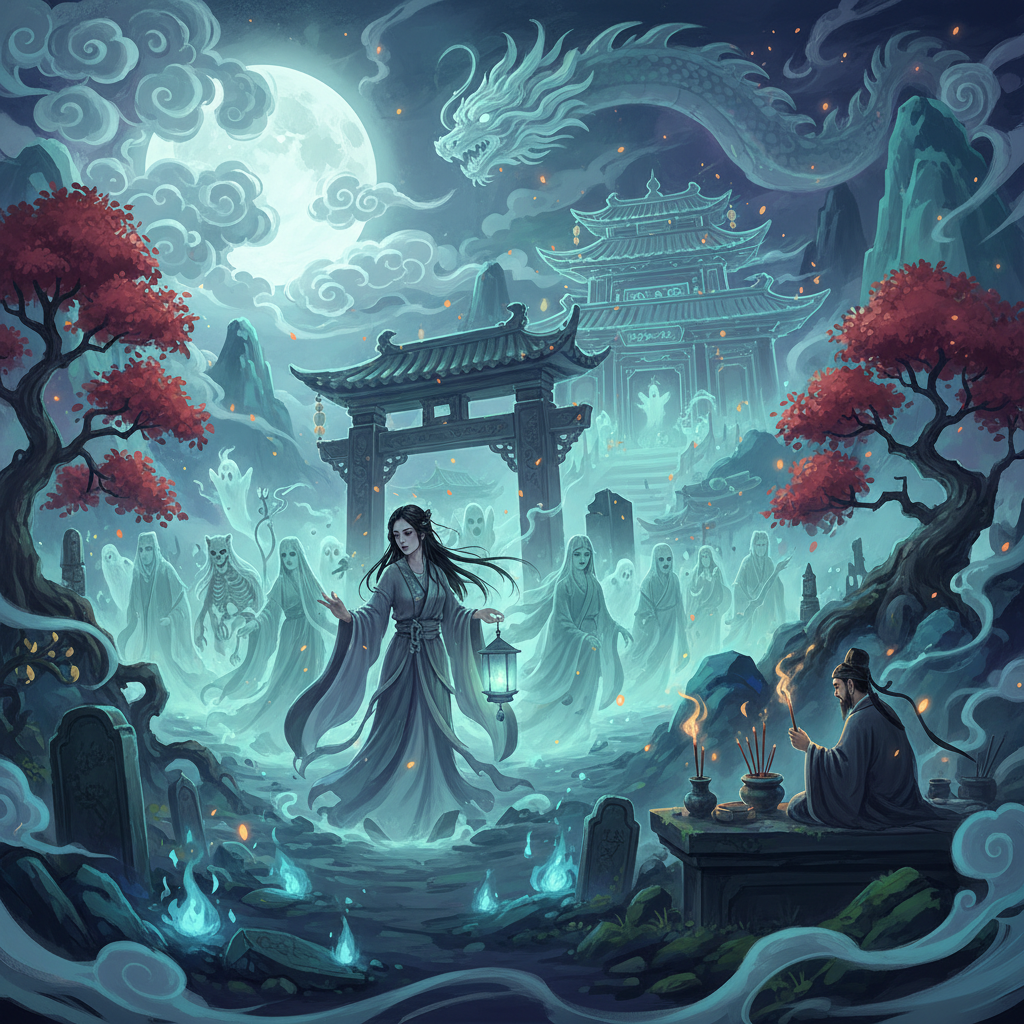
An Introduction to Chinese Supernatural Folklore
Chinese supernatural folklore offers a captivating glimpse into the culture’s rich tapestry of beliefs regarding ghosts, spirits, and the afterlife. Grounded in centuries of history, these beliefs are deeply intertwined with Chinese philosophy, religious practices, and societal norms. Understanding these elements allows us to appreciate the cultural significance and variation of supernatural beings within Chinese traditions.
Historical Context: The Evolution of Ghost Beliefs
Ghostly presences in Chinese folklore date back to ancient dynasties. Confucianism, Taoism, and Buddhism have profoundly influenced these narratives and the cultural framework surrounding death and the afterlife. Confucianism emphasizes ancestor veneration, where the spirits of the dead continue to play an essential role in the lives of their descendants. This intertwining of spiritual belief and deep respect for one's lineage has shaped how ghosts are perceived and interacted with.
During the Han Dynasty (206 BCE - 220 CE), the notion of the afterlife began to gain prominence, with texts like the "Tao Te Ching" further exploring concepts of spiritual existence beyond life. The practice of offering food, incense, and other tributes to appease the spirits gained momentum, influencing significant festivals such as the Qingming Festival and Hungry Ghost Festival, which are vital periods for honoring deceased ancestors.
The Realm of Spirits and Ghosts
In Chinese culture, the supernatural world is populated by a variety of beings, ranging from benevolent spirits to malevolent ghosts. Ghosts, or "gui" (鬼), are often seen as spirits of the deceased who have unresolved issues or a strong attachment to the world of the living. This attachment can stem from untimely deaths, unfulfilled desires, or a lack of proper rituals performed in their honor.
Spirits are categorized into various types, including ancestors, who are revered and venerated, and wandering spirits, who may harbor grievances and seek retribution. The "hungry ghosts" embody the latter concept—souls that suffer from insatiable cravings due to their neglect in life or improper burial rites.
Afterlife Beliefs: Heaven, Hell, and Rebirth
In Chinese spiritual belief, the afterlife is not a monolithic concept; instead, it encompasses various realms and experiences, influenced by different philosophies. Taoism envisions multiple heavens and an underworld ruled by the "King of Hell," Yama, where souls are judged based on their earthly deeds. This judgment can lead to reincarnation, with souls returning to the mortal realm in different forms, a notion embraced by Buddhism as well.
Traditional Chinese beliefs also suggest that the spirits of individuals must undergo a journey after death, during which they encounter various challenges and rewards based on their life choices, thus determining their next existence. Proper funerary practices, including paper offerings and ritualistic rites, are essential for facilitating a smooth transition for the deceased.
Cultural Significance: Festivals and Traditions
The cultural significance of ghosts and the afterlife in Chinese folklore manifests prominently during festivals and rituals. The Qingming Festival (Tomb Sweeping Day) is an occasion dedicated to honoring ancestors, where families need to clean graves, offer food, and burn incense to ensure the spirits are well cared for.
The Hungry Ghost Festival, celebrated on the 15th day of the seventh month of the lunar calendar, is another poignant reminder of the importance placed on appeasing wandering spirits. Families prepare special meals, burn paper money, and set out offerings to satiate the hunger of these restless souls. Such practices reinforce community bonds and highlight the respect for ancestors, contributing to the ongoing dialogue about life, death, and the afterlife.
Modern Interpretations and Influences
In contemporary society, traditional beliefs about ghosts and the afterlife continue to influence art, literature, and popular culture. The supernatural has found new expressions through film and literature, leading to an increase in ghost stories, horror genres, and even folklore-inspired themes in music and art. Authors like Pu Songling, who wrote "Strange Stories from a Chinese Studio," have inspired modern interpretations of supernatural themes, blending old beliefs with contemporary storytelling.
Moreover, urban legends and ghost stories circulate amongst younger generations, ensuring that these folkloric elements persist in the collective memory of the culture.
Conclusion
Chinese supernatural folklore offers a profound lens into the beliefs system surrounding ghosts, spirits, and the afterlife. As these stories and rituals evolve, they continue to connect individuals to their heritage, providing insights into the values, fears, and hopes associated with existence, mortality, and the uncertain journey that awaits beyond life. Understanding these supernatural beings not only enriches our cultural knowledge but also invites reflection on the universal themes of life and death.