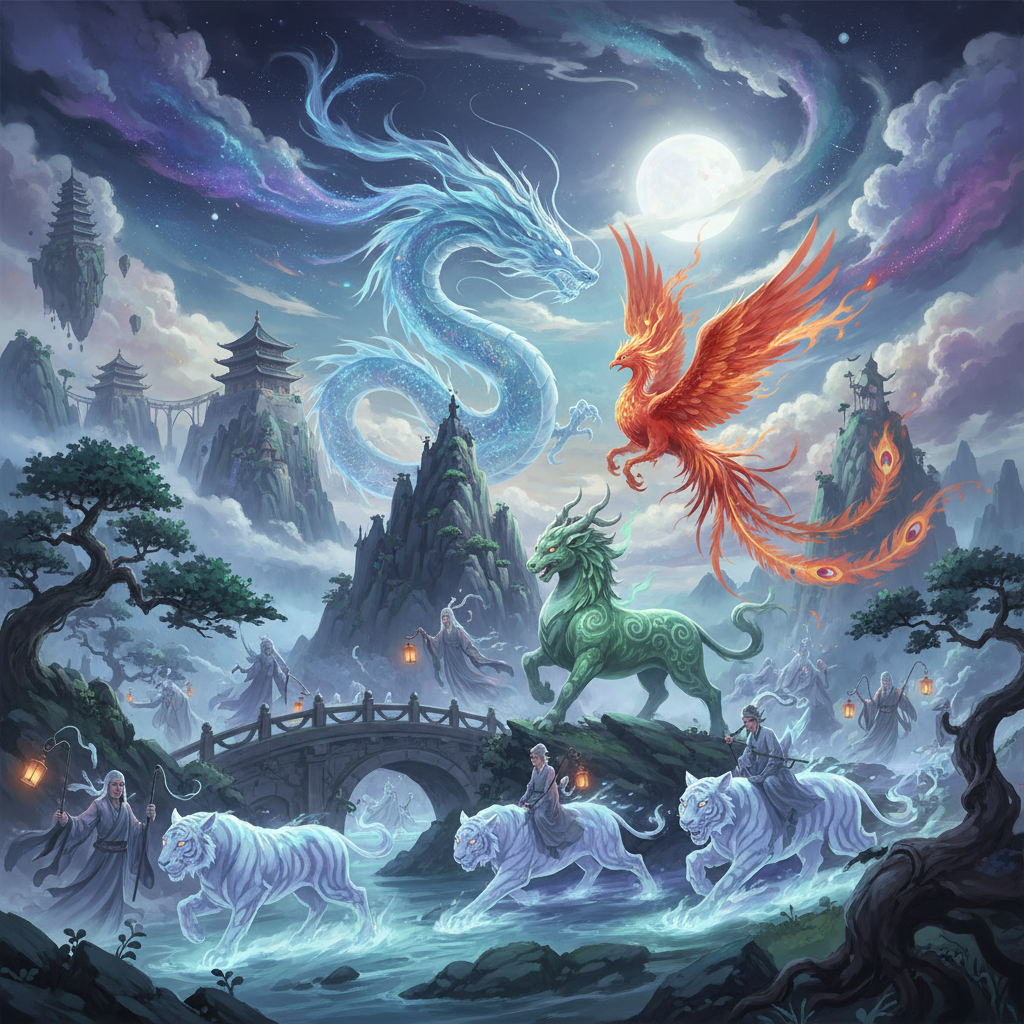
Introduction to Chinese Spirit-Animals in Supernatural Folklore
Chinese folklore is rich with stories of ghosts, spirits, and other supernatural entities, many of which intertwine with the imagery of spirit-animals. These creatures are not mere figments of imagination but carry deep symbolic meanings tied to the culture’s understanding of life, death, and the afterlife. Spirit-animals, or “shén dòngwù” (神动物), are believed to be spiritual guides, protectors, or manifestations of a person’s soul or ancestral spirits. This article delves into the historical context and cultural significance of spirit-animals within Chinese supernatural folklore and afterlife beliefs.
Historical Roots of Spirit-Animals in Chinese Culture
The belief in spirit-animals in China dates back thousands of years, rooted in early animistic and shamanistic practices during the Neolithic period. Indigenous tribes revered animals as powerful totems connected to human destinies and natural forces. As Chinese civilization evolved, these animistic elements integrated with Confucianism, Taoism, and Buddhism, enriching the spiritual symbolism of animals. Ancient texts such as the Classic of Mountains and Seas (Shan Hai Jing) and Taoist scriptures describe animals with supernatural powers, often acting as messengers between the earthly realm and the spirit world.
In traditional Chinese cosmology, animals embody cosmic energies and are classified according to the Five Elements (Wood, Fire, Earth, Metal, Water) and Yin-Yang principles. Spirit-animals were considered to bridge the physical and spiritual realms, often accompanying the souls of the departed or protecting the living from malevolent forces.
Common Spirit-Animals and Their Symbolism
Chinese folklore features a variety of spirit-animals, each with unique attributes and roles in the supernatural landscape:
- The White Tiger (Bái Hǔ, 白虎): Representing the West and metal element, the White Tiger is often seen as the guardian of the dead and a powerful protector against evil spirits. It is sometimes believed to escort souls to the afterlife.
- The Azure Dragon (Qīng Lóng, 青龙): Associated with the East and the wood element, the Azure Dragon symbolizes strength, nobility, and spiritual guidance. As a spirit-animal, it may lead wandering souls to peace.
- The Vermilion Bird (Zhū Què, 朱雀): This mythical bird represents the South and fire element, symbolizing renewal, rebirth, and transformation — vital concepts in Chinese views of the afterlife.
- The Black Tortoise (Xuán Wǔ, 玄武): Governed by the North and water element, this composite creature (turtle entwined with a snake) embodies protection, longevity, and the mystery of the underworld.
- Fox Spirits (Húli Jīng, 狐狸精): While not always considered benevolent, fox spirits hold a significant place as shape-shifting beings capable of influencing the human and spirit worlds. Some foxes serve as spirit-animals linked to psychic abilities and spiritual insight.
These creatures often appear in folktales, temple iconography, and ritual practices, reinforcing their enduring presence in the cultural psyche.
Spirit-Animals as Soul Escorts and Guardians in Afterlife Beliefs
In Chinese afterlife beliefs, the transition of the soul from the earthly realm to the spirit world is a delicate process. Spirit-animals play crucial roles as soul escorts ("yǐnsǐ dòngwù" 引死动物) and guardians warding off harmful entities. According to folk customs and Taoist rituals, certain animals—either physical or spiritual—are believed to "guide" the deceased on their journey through the underworld and ensure safe passage to their ancestral realm or reincarnation cycle.
For example, dogs and wolves have historically been associated with guiding souls, possibly due to their keen senses and loyalty. Funeral processions and ancestral rites sometimes invoked these animals symbolically, asking for their protection over the deceased’s spirit. In some rural areas, specific animals or idols may be placed beside graves to act as guardians or spiritual gatekeepers, reflecting longstanding customs connecting the natural and supernatural worlds.
Taoist and Buddhist Influences on Spirit-Animal Beliefs
Taoism and Buddhism, two major religions in China, further shaped the narrative around spirit-animals. Taoism, with its focus on harmony between humanity and nature, regards animals as embodiments of cosmic forces and vehicles for immortality or spiritual transcendence. Taoist texts describe celestial animals inhabiting spiritual realms and assisting practitioners in their quest to attain enlightenment or avoid malevolent spirits.
Meanwhile, Buddhist cosmology introduced the notion of reincarnation and karmic cycles, where animals could be reincarnated human souls and vice versa. In this belief system, some spirit-animals signify karmic debts or blessings. For instance, the Buddhist protective lion is a common motif symbolizing guardianship of sacred spaces and spiritual power. Monasteries and temples often feature guardian animal statues to keep away evil spirits and maintain spiritual balance.
Conclusion: The Enduring Legacy of Spirit-Animals in Chinese Folklore
Spirit-animals remain a vibrant component of Chinese supernatural folklore and afterlife beliefs, highlighting humanity’s ancient attempts to comprehend the mysteries of death and the spirit world. These creatures embody complex intersections of mythology, religion, philosophy, and culture that continue to inspire storytelling, religious practice, and popular culture today. By understanding the symbolic language of spirit-animals, we gain insight into how traditional Chinese culture perceives the invisible realms and the eternal journey of the soul.
In postmodern China, these age-old motifs survive not only in rituals and festivals but also in literature, cinema, and digital media, connecting past wisdom with contemporary imagination and spiritual curiosity. Exploring spirit-animals offers a window into the profound spiritual heritage and mysterious enchantment of Chinese supernatural folklore.