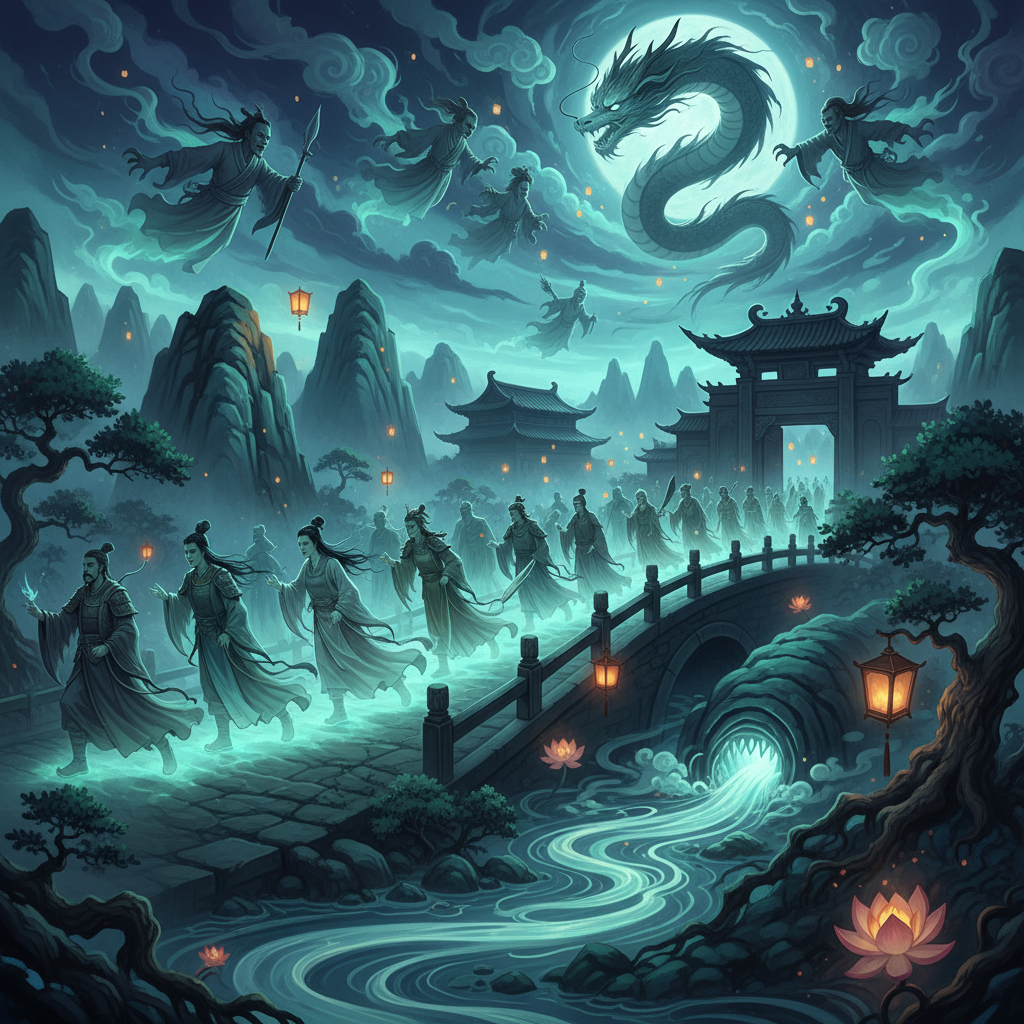
Understanding Chinese Supernatural Folklore
Chinese supernatural folklore is an intricate web of beliefs and narratives that encapsulate the diverse cultural and historical landscapes of China. Encompassing a broad spectrum of ghost stories, spirit encounters, and concepts of the afterlife, these tales offer profound insights into the values, fears, and aspirations of Chinese society. From ancient dynasties to modern urban legends, the rich traditions surrounding the supernatural reflect a societal journey marked by the influences of Confucianism, Buddhism, and Daoism.
Historical Context: Roots of Supernatural Beliefs
The foundations of Chinese supernatural beliefs can be traced back over thousands of years. Ancient texts like the "Shan Hai Jing" (Classic of Mountains and Seas) and "Laozi" chronicle early descriptions of ghostly encounters and the afterlife. The integration of Buddhism from India during the Han Dynasty (206 BC–220 AD) introduced new dimensions to these beliefs, interweaving ideas of karma and reincarnation into existing Daoist and Confucian frameworks.
Cultural texts from the Tang (618-907) and Song (960-1279) dynasties reveal a complex relationship between the living and the spirits of the deceased. The belief that ancestors continue to influence their living descendants led to the practice of ancestor worship, remaining a significant aspect of Chinese culture. Historically, this deep reverence for familial ties and respect for the dead shaped the way supernatural phenomena are interpreted, culminating in a rich narrative tapestry that persists to this day.
Ghostly Encounters: Types of Spirits
Chinese folklore distinguishes between various types of spirits and ghosts, each embodying unique traits and origins. One prevalent figure is the hungry ghost, typically considered a restless soul suffering from unfulfilled desires. It represents a moral lesson about greed and attachment, emphasizing the need for balance in one's life.
Conversely, benevolent spirits, often associated with ancestors or tutelary deities, offer protection and guidance to the living. These spirits can emerge in various forms, including spirit animals or hidden guardians, symbolizing prosperity and well-being.
Moreover, the diverse mythos includes more enigmatic entities like the zhuang, a type of spirit that can inhabit living beings, reflected in tales cataloged by writers such as Pu Songling in "Strange Stories from a Chinese Studio." Such narratives reveal a broader understanding of spirituality that transcends mere fear, inviting contemplation and reverence for unseen forces.
The Afterlife: Beliefs and Practices
In Chinese culture, beliefs about the afterlife are deeply intertwined with the concept of filial piety (xiao), emphasizing the importance of familial bonds. The afterlife is often perceived as a continuation of one's earthly existence, where the soul (linghun) travels through various realms, facing judgment based on one's deeds in life.
One widely accepted belief is the Yin-Yang duality, where the soul navigates both worlds—Yin representing the realm of the dead and Yang representing the realm of the living. This journey often entails encounters with deities who assess the soul’s virtue and sins. The Ten Court of Hell, presided over by the King of Hell, Yama, features vividly graphic tales of punishment and redemption, vital in instilling moral responsibility in the living.
Many contemporary practices, such as burning incense or making paper offerings, stem from ancient rituals. These offerings are believed to provide comfort and sustenance to the spirits, ensuring their well-being in the afterlife, illustrating a persistent connection between the worlds of the living and the deceased.
Modern-Day Ghost Stories: Legends that Persist
Modern Chinese cities are still steeped in supernatural tales, often revolving around ghostly encounters in abandoned buildings, graveyards, or historical sites. Urban legends, such as the infamous "white-clothed woman" ghost, continue to transcend generations, captivating the imagination of youth. These stories frequently appear in popular media, from novels to films, blending urban life with traditional beliefs.
Notably, public ghost tours in cities like Beijing and Shanghai are gaining popularity, drawing visitors into the eerie allure of the supernatural. These events not only serve as entertainment but also as a means of cultural conservation, allowing the younger generations to engage with their heritage while exploring the unknown.
Cultural Significance: Lessons from Folklore
The rich tapestry of Chinese supernatural folklore serves multiple purposes in society—it reinforces moral values, reflects societal norms, and strengthens communal bonds. By relaying ghost stories and lessons about spirits and the afterlife, these narratives encourage introspection regarding morality, ethics, and the consequences of one's actions.
Furthermore, they offer a canvas for expressing human emotions surrounding loss, grief, and the unknown. By navigating the realm of the supernatural, individuals can grapple with fundamental questions about existence, ultimately leading to a more nuanced understanding of life, death, and the interconnectedness of the two.
In summary, Chinese supernatural folklore remains a vital component of cultural expression, providing audiences with insights into the rich heritage of beliefs surrounding ghosts, spirits, and the afterlife. As these narratives evolve, they continue to inspire wonder and reflection, ensuring their place in the tapestry of modern Chinese life.