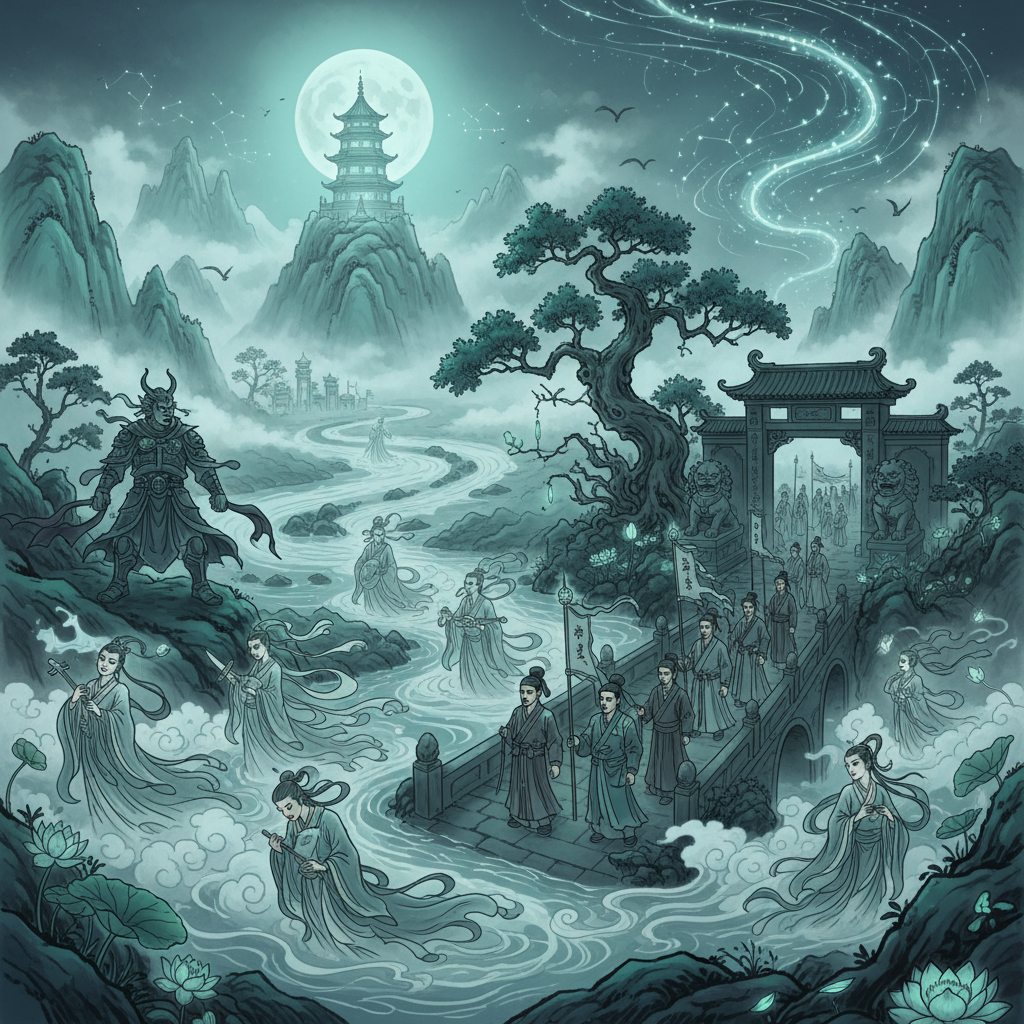
The Intriguing World of Chinese Supernatural Folklore
Chinese supernatural folklore is a complex and multifaceted realm that reflects centuries of historical evolution, cultural values, and philosophical beliefs. Rooted in ancient traditions and shaped by Confucianism, Taoism, and Buddhism, these tales weave together ghostly encounters, spirits, and elaborate afterlife beliefs. As we delve into this fascinating world, we uncover how these beliefs shape contemporary cultural practices and attitudes towards death.
Historical Context of Ghostly tales
The concept of ghosts and spirits in Chinese culture has deep historical roots, tracing back over 3,000 years. Ancient texts such as the "Shijing" (Book of Songs) and later works like "Strange Stories from a Chinese Studio" (聊斋志异) by Pu Songling illustrate the early reverence for the spirit world. The Han Dynasty (206 BCE - 220 CE) was crucial in solidifying these beliefs, with the introduction of the idea that the soul continues to exist after death, leading to complex practices around honoring ancestors.
The Influence of Confucianism and Taoism
Confucianism plays a crucial role in shaping the Chinese perspective on death and the afterlife. The teachings emphasize filial piety, leading to customs of ancestor worship and veneration. Families honor their ancestors with offerings, rituals, and regular visits to graves to keep the familial bond strong even in the afterlife.
Conversely, Taoism introduces a more mystical understanding of the supernatural. Taoism’s theme of harmony with the universe gives rise to beliefs about spirits residing in natural elements and the notion of immortality. Consequently, the merging of these philosophies has fostered a unique Chinese worldview regarding the afterlife.
Ghosts and Spirits: Varied Depictions and Beliefs
In Chinese folklore, ghosts (鬼, guǐ) are often depicted as the spirits of deceased individuals who have unfinished business or unresolved issues. They may seek vengeance, comfort, or answers. One of the most recognizable figures is the "hungry ghost," which represents souls that wander in search of satisfaction due to improper burial or lack of offerings from the living.
Additionally, other benevolent spirits known as "Shen" (神) serve as protectors and guardians. The dichotomy between good and malevolent spirits creates rich narratives that often reflect moral lessons, cultural values, and fears. For example, stories of "White Lady" specters serve to caution against misdeeds and emphasize the importance of virtue.
Customs Surrounding Death and the Afterlife
The customs associated with death and the afterlife in Chinese culture are elaborate, showcasing a profound respect for the deceased. The Qingming Festival, also known as Tomb-Sweeping Day, is an essential event where families pay their respects to their ancestors by cleaning their graves and offering food, incense, and paper money to ensure comfort in the afterlife.
Moreover, the practice of "ghost marriage" exists, where families arrange symbolic marriages for deceased individuals who died unmarried, ensuring that their spirits are not lonely in the afterlife. These customs highlight the significance of familial ties and the strong belief that life extends beyond death.
Notable Haunted Places in China
China boasts numerous haunted places steeped in supernatural tales that draw visitors intrigued by ghosts and spirits. One remarkable location is the "Ghost City" of Fengdu, reputedly a bridge between the living and the dead. The ethereal allure of this "City of Ghosts" invites exploration into the belief systems surrounding the afterlife, including a glimpse into the Ten Courts of Hell where souls are judged.
Another notable site is the Forbidden City in Beijing, where countless spirits are said to linger, and sightings of ghostly figures have been reported by visitors and staff alike. This intersection of history and the supernatural continues to captivate imaginations and further solidify the cultural significance of ghosts in Chinese folklore.
Conclusion: The Enduring Legacy of Chinese Supernatural Beliefs
Chinese supernatural folklore reflects a rich tapestry of beliefs about ghosts, spirits, and the afterlife that continue to influence cultural practices today. The enduring nature of these beliefs expresses the desire for connection with ancestors and the investigation of mortality. By understanding these narratives, we gain insights into the values and fears that bind societies across generations. The exploration of ghosts in Chinese culture is not only a journey through the past but also a reflection of enduring human curiosity about what lies beyond the veil of death.