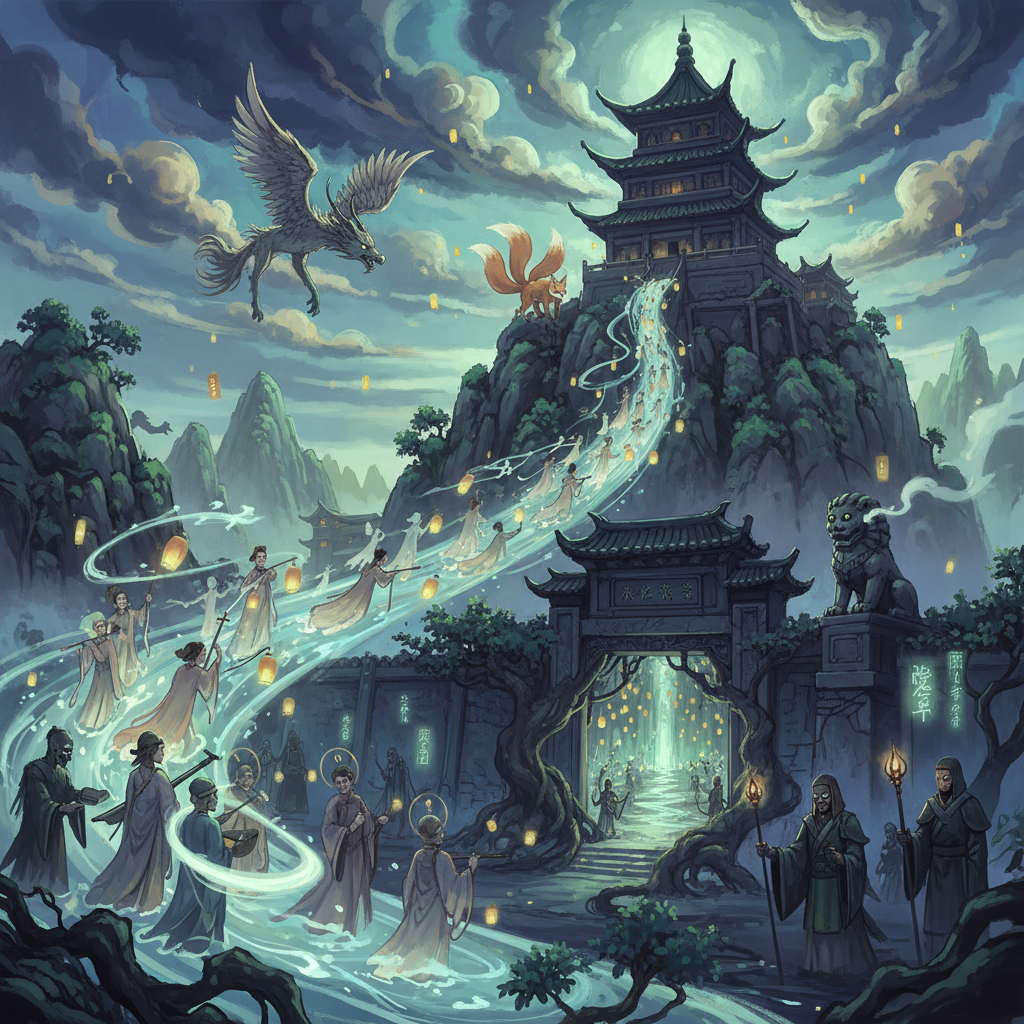
The Essence of Chinese Supernatural Folklore
Chinese folklore is a rich tapestry woven from thousands of years of history and cultural evolution. It is a fascinating blend of myths, legends, and supernatural elements that reflect the beliefs, fears, and aspirations of the people. Central to this folklore are the concepts of ghosts, spirits, and afterlife beliefs, which play a significant role in various festivals and traditions throughout the country. Understanding these elements provides deeper insight into Chinese cultural heritage and the ways in which the living honor the spiritual realm.
Historical Context: Roots of Beliefs in the Afterlife
The belief in the afterlife can be traced back to ancient Chinese dynasties, where ancestor worship became a cornerstone of societal norms. Traditional Confucian teachings emphasized filial piety, advocating respect and reverence for one's ancestors. This cultural practice was not merely a matter of respect; it reflected a deeply ingrained belief that the spirits of the dead would continue to influence the lives of the living.
Archaeological findings, such as burial sites and artifacts, reveal that ancient Chinese people dedicated extensive energy to preparing for the afterlife, indicating strong beliefs about an existence beyond death. This historical backdrop establishes a foundation for the way spirits and ghosts are perceived within Chinese culture today.
Spirits and Ghosts: Beyond the Mortal Realm
In Chinese mythology, spirits are often categorized into benevolent and malevolent entities. On one hand, there are guardian spirits who guide and protect the living; on the other, there are ghosts of those who have suffered unjustly or who died in tragic circumstances. These ghosts can become restless, wandering between realms due to unresolved issues.
One well-known supernatural concept is that of the Hungry Ghost, characterized by insatiable hunger for earthly pleasures. According to folklore, these spirits were wronged in life, leading to their haunting existence in the afterlife. Festivals such as the Ghost Festival, celebrated on the 15th day of the seventh lunar month, are dedicated to appeasing these wandering souls. During this time, families prepare offerings of food, incense, and paper money, which are burned to ensure that the spirits are honored and their needs met.
Cultural Significance of Ghost Festivals
Ghost festivals stand as a testament to the China’s intricate relationship with the supernatural. Observances like the Ghost Festival (中元节) showcase a blend of Buddhist and Taoist traditions, where entire communities come together to remember their ancestors and the spirits of the deceased.
During these celebrations, streets are filled with colorful lanterns, and elaborate altars are constructed. People perform rituals, including burning joss paper—representative offerings meant to provide for the deceased in the afterlife. These practices serve not only to appease restless spirits but also to strengthen familial bonds among the living, underscoring the importance of family heritage and remembrance in Chinese society.
The Modern Influence of Supernatural Beliefs
While many traditional beliefs still hold sway in contemporary China, the rapid modernization of society has influenced how these supernatural elements are perceived. Younger generations may not participate in traditional festivals to the extent of their ancestors, yet the fascination with ghosts and spirits persists, particularly in literature, film, and art.
Modern adaptations, such as ghost-related films and television dramas, explore these age-old tales, marrying traditional beliefs with contemporary storytelling techniques. This blend not only captivates audiences but also acts as a bridge connecting the present with the rich lore of the past. The enduring popularity of ghost stories in entertainment emphasizes the cultural significance of these narratives as essential components of identity and heritage.
Exploring the Afterlife: Beliefs and Practices
The intricacies of the Chinese beliefs surrounding the afterlife reveal a spectrum of thoughts and practices. Many individuals follow Buddhist principles, believing in reincarnation and the cycle of life and death. Others may be swayed by Taoist ideals, emphasizing harmony with the spiritual world and the natural order. Thus, practices may vary based on personal or familial interpretations, making the afterlife a deeply personal yet commonly shared experience.
In rituals such as ancestor worship, it is believed that ancestors can provide blessings, guidance, and even protection to their descendants. Engaging in these customs helps forge a spiritual connection that transcends the physical world.
Conclusion: A Complex Cultural Legacy
Chinese supernatural folklore eloquently illustrates a complex worldview, where reality and mythology intersect. The beliefs regarding spirits, ghosts, and the afterlife not only reflect collective fears and aspirations but also serve as a reminder of the importance of family, respect, and remembrance in Chinese culture.
As globalization continues to influence modern Chinese life, the enduring nature of these beliefs showcases their significance in maintaining cultural identity. By embracing both ancient and contemporary perspectives, the Chinese continue to honor their rich heritage while navigating the complexities of life, death, and everything beyond.